

Overview
Building a Scalable and Inclusive Home Experience That Kids Can Navigate With Confidence
Building a Scalable and Inclusive Home Experience That Kids Can Navigate With Confidence

Problem
This project focused on redesigning the SKIDOS home experience to support young and neurodivergent users while scaling across content, brands, and devices.
This project focused on redesigning the SKIDOS home experience to support young and neurodivergent users while scaling across content, brands, and devices.
This project focused on redesigning the SKIDOS home experience to support young and neurodivergent users while scaling across content, brands, and devices.
Goal
Design a single, scalable and Inclusive home experience that simplifies choices make kid‑navigable in 2 taps and parent‑trustworthy at first use.Increase daily active usage and reduce onboarding friction.
Design a single, scalable and Inclusive home experience that simplifies choices make kid‑navigable in 2 taps and parent‑trustworthy at first use.Increase daily active usage and reduce onboarding friction.
Design a single, scalable and Inclusive home experience that simplifies choices make kid‑navigable in 2 taps and parent‑trustworthy at first use.Increase daily active usage and reduce onboarding friction.
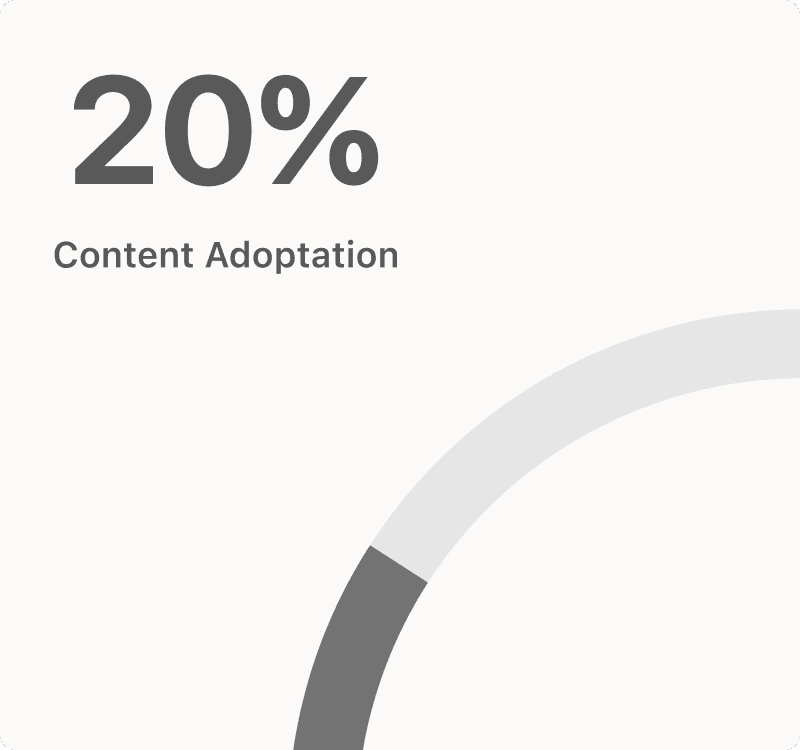
Content adoption
Content adoption
Content adoption
↑ 225%
↑ 225%
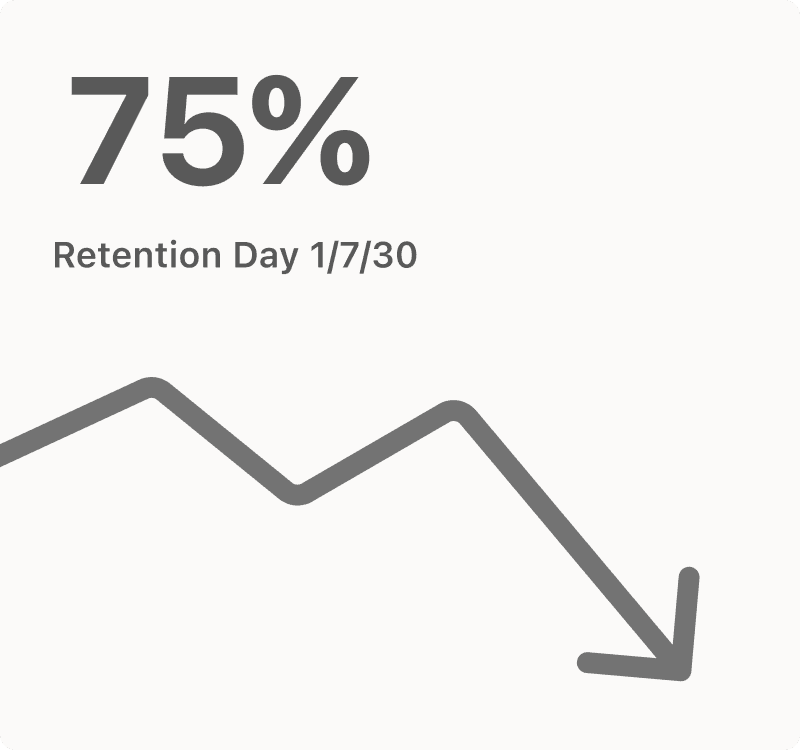
Retention D3/7/30
Retention D3/7/30
Retention D3/7/30
↑ 14.59%
↑ 14.59%
Neurodivergent Engagement
Neurodivergent Engagement
Neurodivergent
Engagement
↑ 37.74%
↑ 37.74%
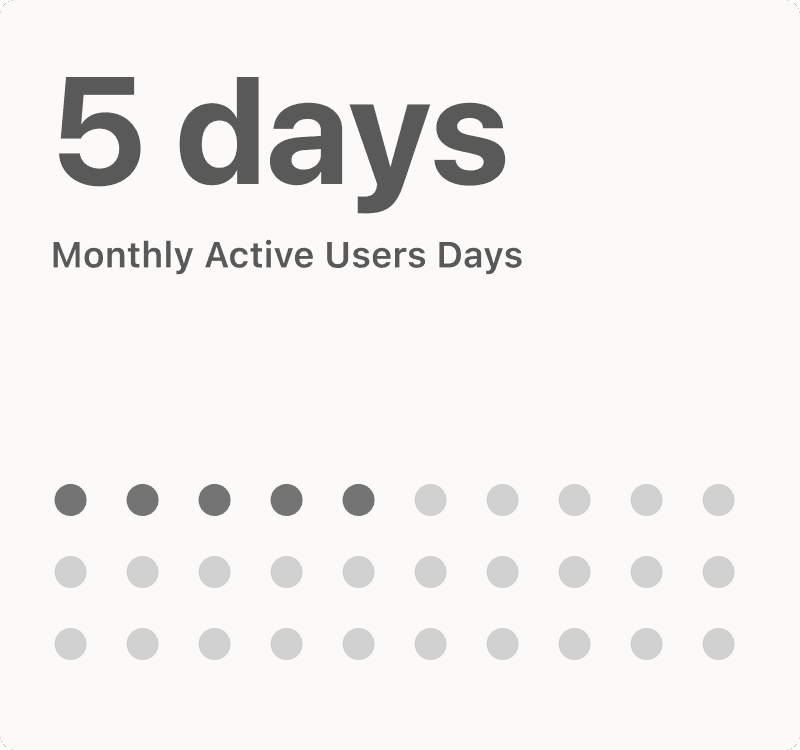
MAUD
MAUD
MAUD
↑ 13.60%
↑ 13.60%
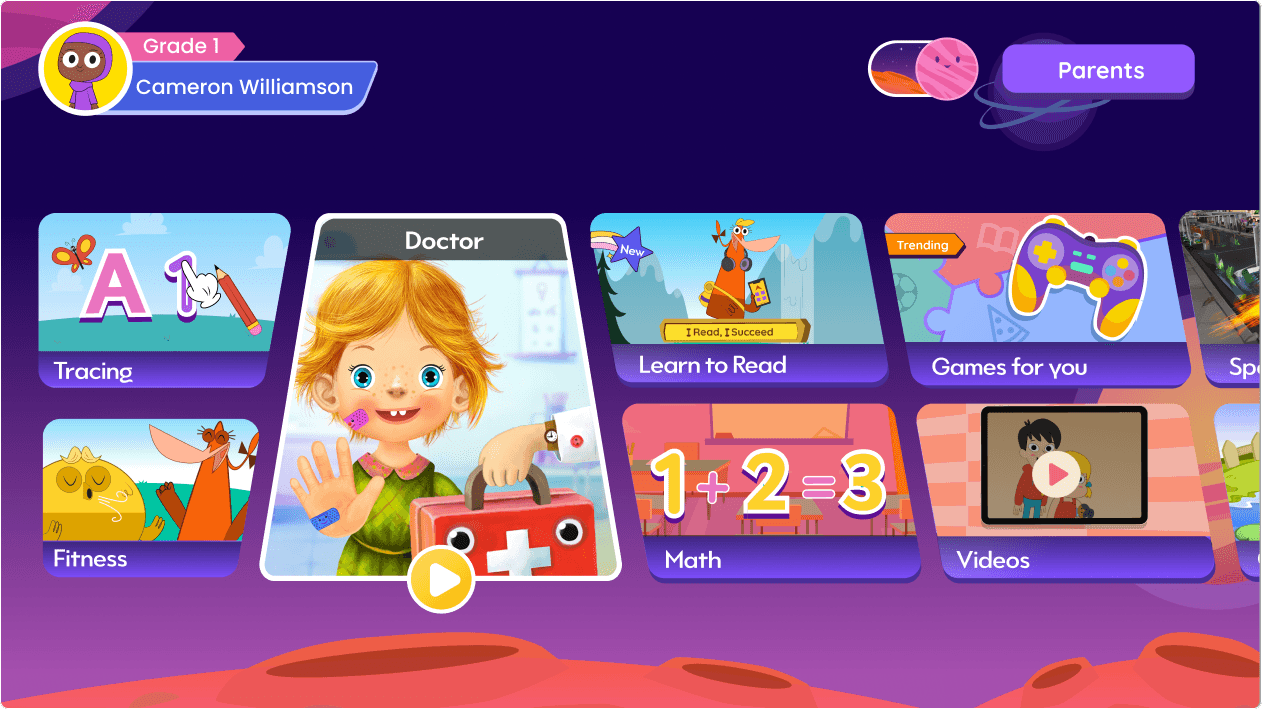
Old Design
New Design
Old Design
Old Design
New Design
Old Design
Old Design
New Design
Old Design
RT3 - Role, Team, Timeline and Tools
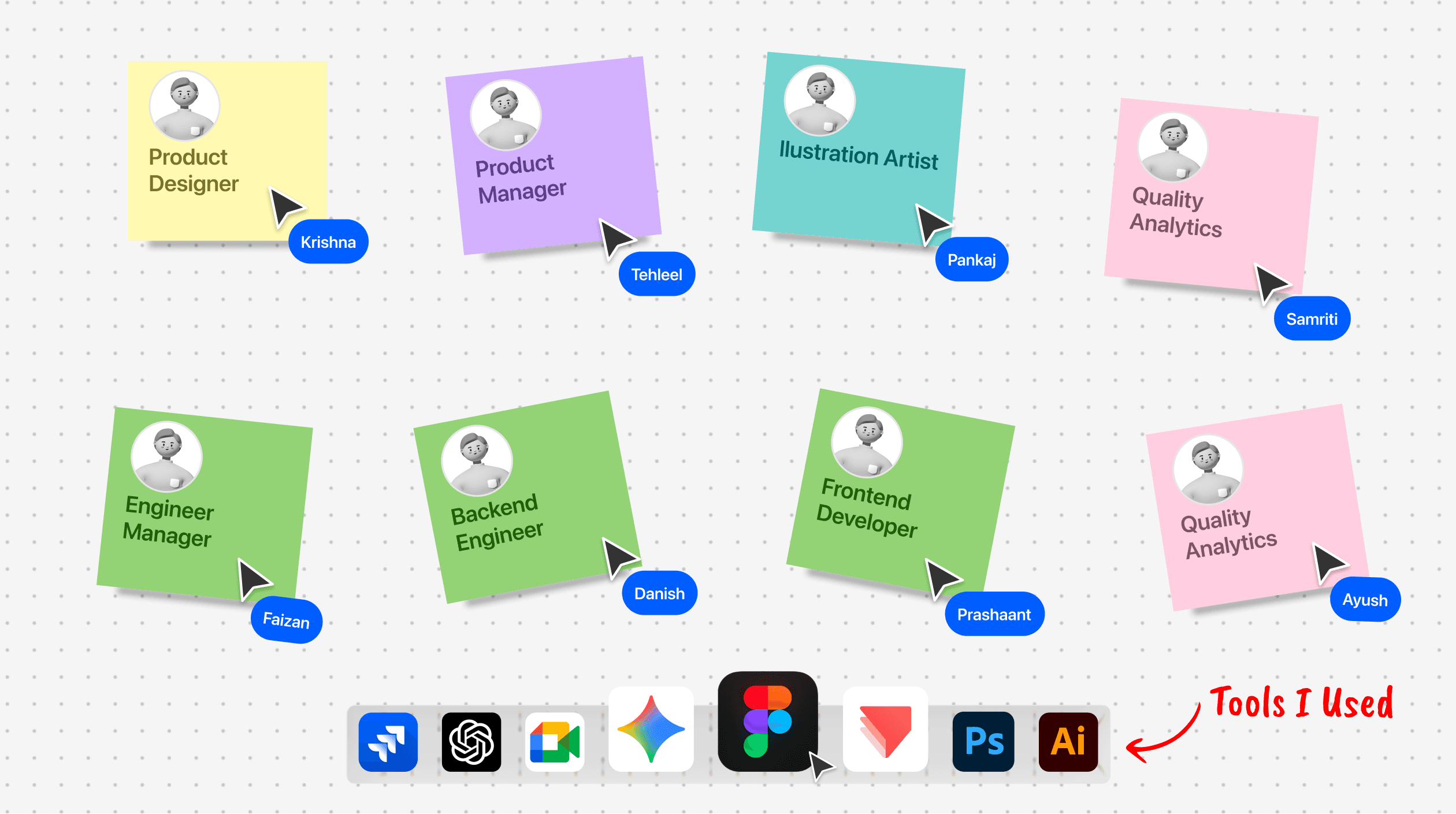
I collaborated closely with an ex-Apple accessibility expert, SKIDOS product teams, and engineering partners to identify issues, iterate quickly, and validate solutions.
I collaborated closely with an ex-Apple accessibility expert, SKIDOS product teams, and engineering partners to identify issues, iterate quickly, and validate solutions.
Lee West (Ex.Apple) help us crafting step by step guidelines to create a product which is Neurodivergent friendly.
Continue trust and impact another big project, where I owned the full design process—from research and ideation to prototyping, testing, and delivery.
Worked closely with PMs to align user needs with business goals and ensure every touchpoint felt intentional.
Partnered with engineers to turn concepts into scalable solutions and iterate around technical constraints.
Ran user tests on users with the PM and collaborated with the data analytics engineer to know user behaviour for better impactful product.
Building on these challenges, the new home experience must become a scalable, low‑friction foundation that simplifies choice, boosts discovery of our full game and IP catalog, and measurably improves both engagement and learning outcomes for every child.
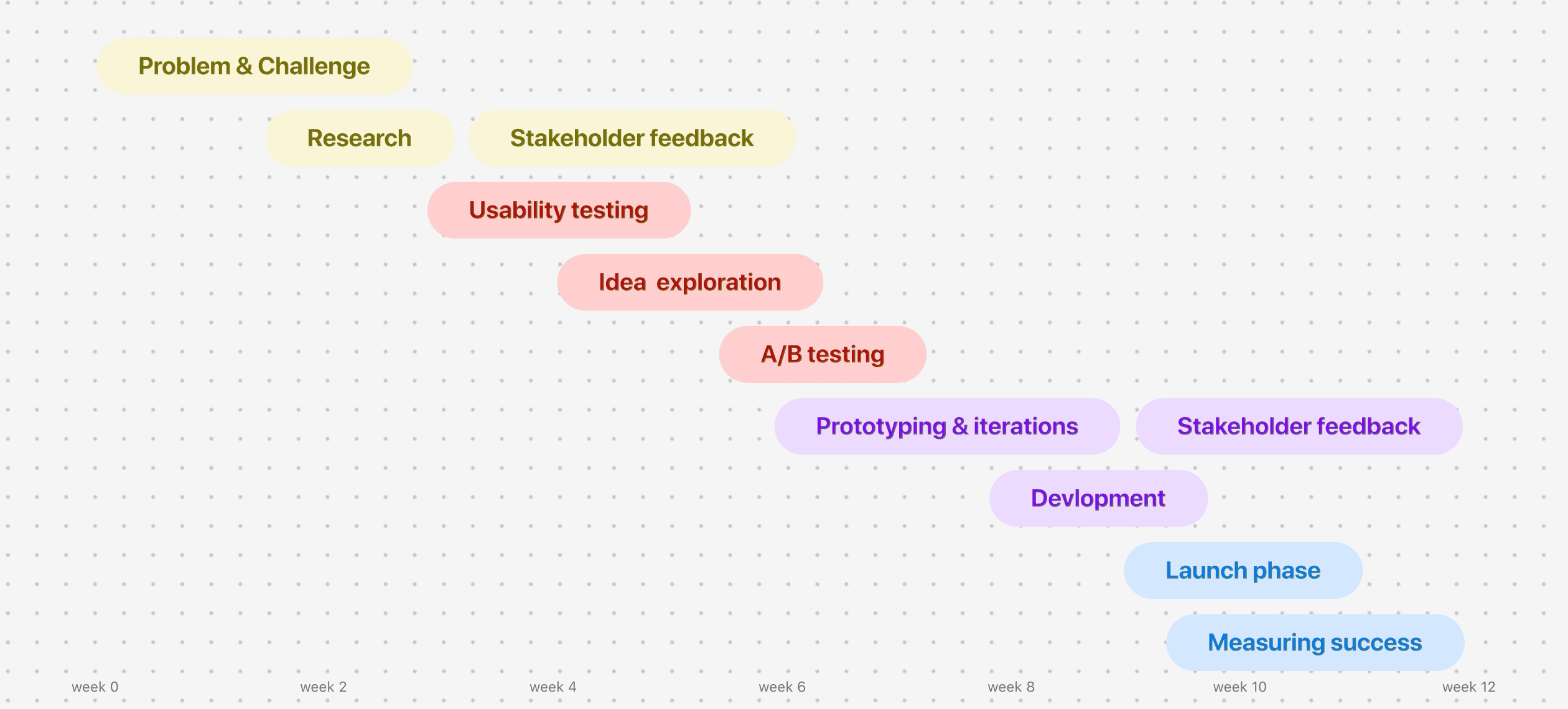
12 Sprint breakdown
Problem
Observing Kids to Understand What Actually Matters
Observing Kids to Understand What Actually Matters
visual representation**
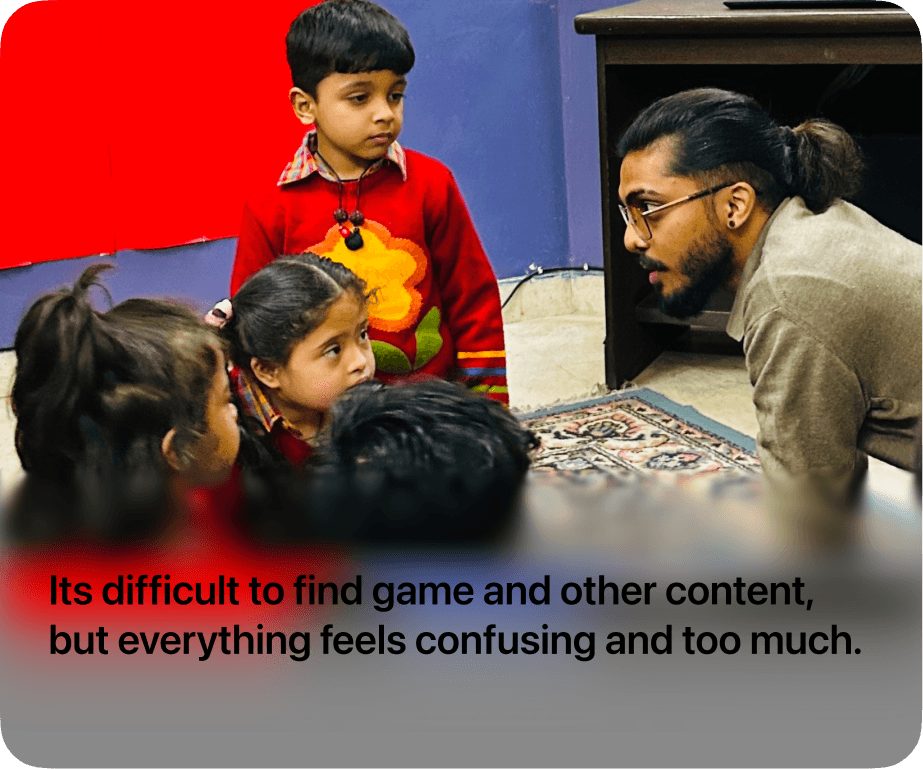
Kids feel overwhelmed by too many similar tiles and choices.
Kids struggle to quickly find age‑ and interest‑appropriate content because child is impatient.
Home screen pushes one hero game while hiding the rest of the catalog.
Understanding neurodivergent and neurotypical kids sensory needs.
Pre‑readers rely on visuals; text labels alone are hard to understand.
Navigation is inconsistent, so kids guess what is tappable or playable.
Screen is not fully responsive on small devices and varied contexts.
Cognitive load is high, causing confusion and early drop‑off.
Kids feel overwhelmed by too many similar tiles and choices.
Kids struggle to quickly find age‑ and interest‑appropriate content because child is impatient.
Home screen pushes one hero game while hiding the rest of the catalog.
Understanding neurodivergent and neurotypical kids sensory needs.
Pre‑readers rely on visuals; text labels alone are hard to understand.
Navigation is inconsistent, so kids guess what is tappable or playable.
Screen is not fully responsive on small devices and varied contexts.
Cognitive load is high, causing confusion and early drop‑off.
Adding more tiles does not scale; edge tiles get very low CTR.
Catalog discovery is weak; many of the 40+ games remain unused affecting MAUD.
Global IP partners lack guaranteed, visible placement on the home.
Current layout is hard to A/B test and iterate without redesign.
Personalization signals exist, but UI does not adapt to them well.
Design is not fully localization‑ready for 14+ languages.
Accessibility gaps risk excluding families and hurting reputation.
Moving from many apps to one app creates tech and UX fragmentation.
Low engagement and retention threaten recurring revenue, LTV and increasing churn rate.
Adding more tiles does not scale; edge tiles get very low CTR.
Catalog discovery is weak; many of the 40+ games remain unused affecting MAUD.
Global IP partners lack guaranteed, visible placement on the home.
Current layout is hard to A/B test and iterate without redesign.
Personalization signals exist, but UI does not adapt to them well.
Design is not fully localization‑ready for 14+ languages.
Accessibility gaps risk excluding families and hurting reputation.
Moving from many apps to one app creates tech and UX fragmentation.
Low engagement and retention threaten recurring revenue, LTV and increasing churn rate.
Research and Iterations
Understanding How Kids Use Early Versions
Understanding How Kids Use Early Versions
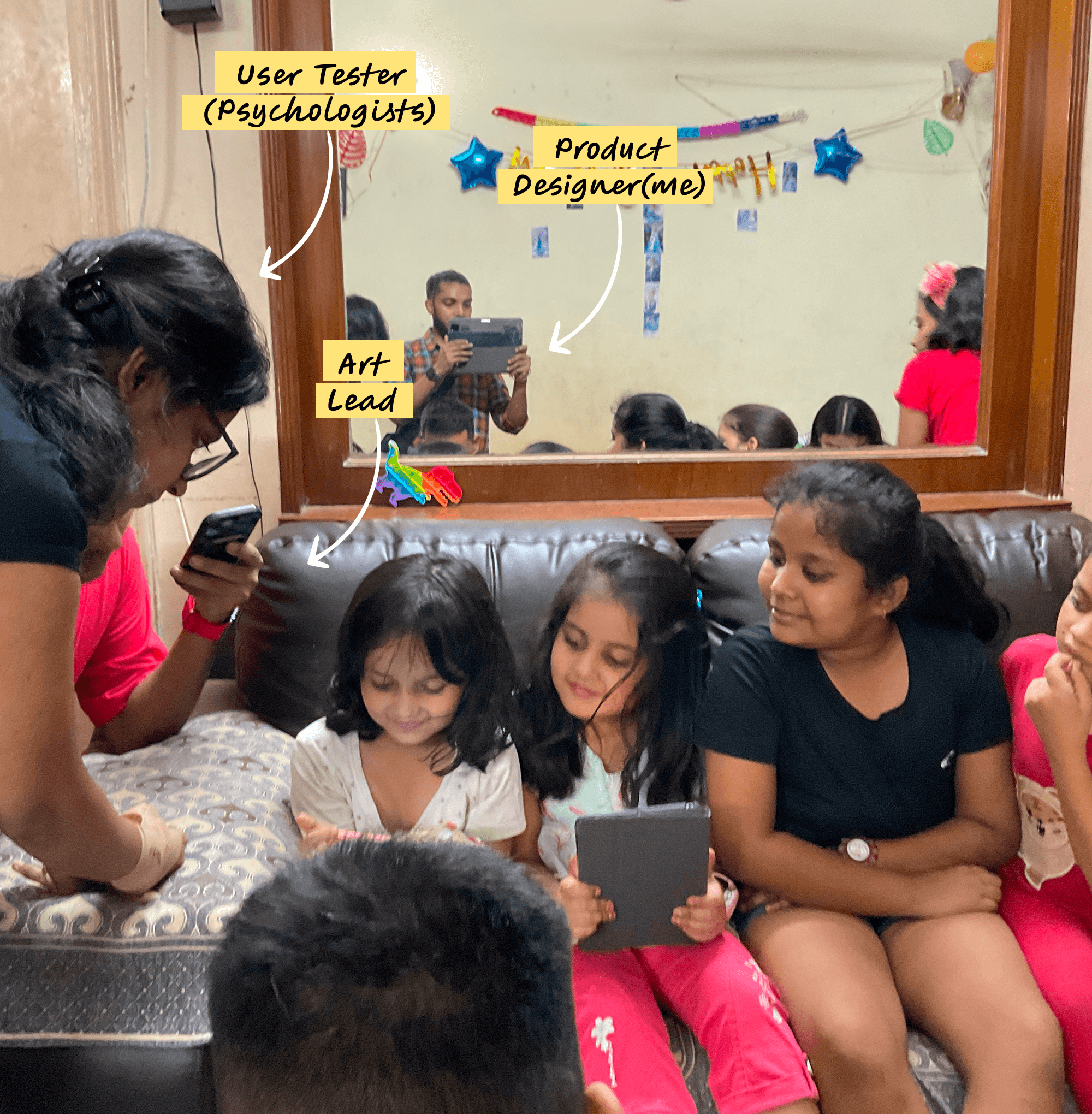
Two moderated usability sessions were conducted to observe and understand real user behaviour.
Each session included 6–8 children aged 3–7.
A psychologist was present to supervise and support the qualitative testing.
The goal of these sessions was to capture kids’ behaviour, emotions, and expressions in real time, then use those observations and post‑session feedback to refine the home screen design and improve related features.
Iteration 1
Iteration 1
Experiment
Experiment
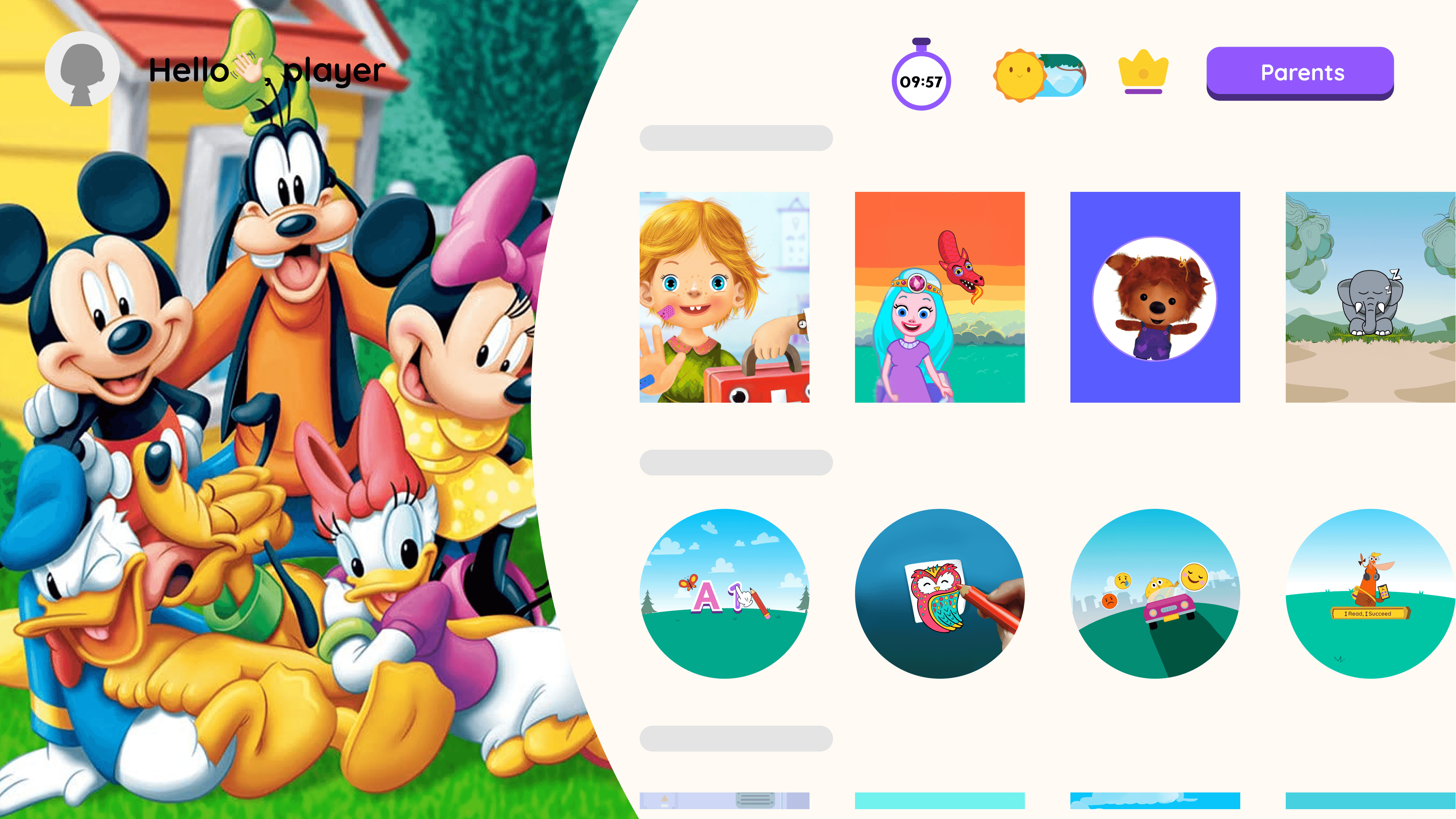
the hypothesis is to test the user first action point game vs IP. is they understand how to scroll (horizontal and vertically both) and is the shapes is being understandable by the kids (if explained).
the hypothesis is to test the user first action point game vs IP. is they understand how to scroll (horizontal and vertically both) and is the shapes is being understandable by the kids (if explained).
Result
Result
scroll is working fine. different shapes failed to make there impact. the curved edges makes it difficult to slide the drawer.
scroll is working fine. different shapes failed to make there impact. the curved edges makes it difficult to slide the drawer.
Get Started Screen
Get Started Screen
Experiment
Experiment
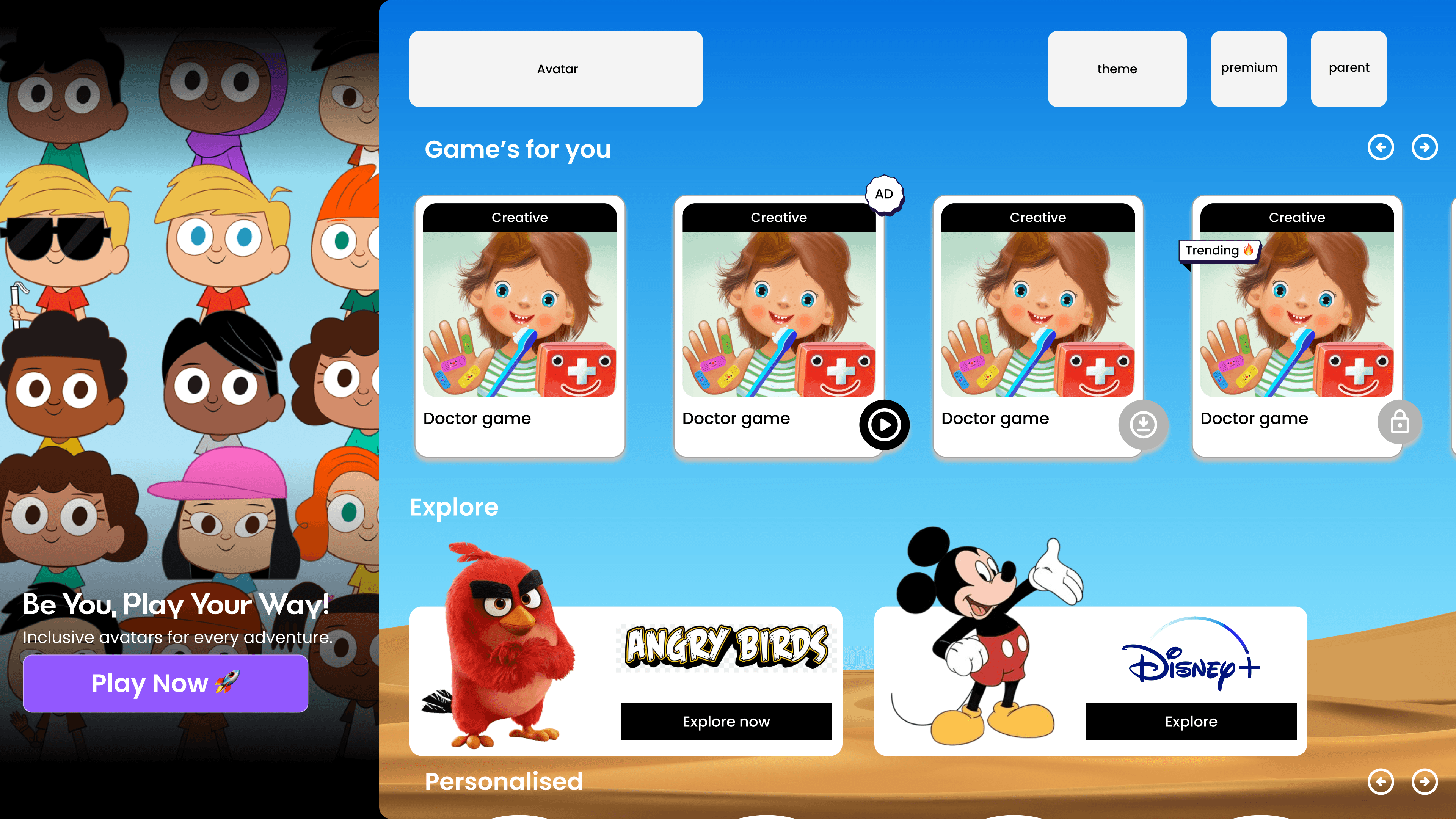
tested a new design with incorporated feedback from user testing. added some elements of accessibility and tested the expansion of more content and left promoted content.
tested a new design with incorporated feedback from user testing. added some elements of accessibility and tested the expansion of more content and left promoted content.
Result
Result
some test result was in our favour. the kids love the new design and understand where to click. the one thing which has the unexpected result is the IP tile with pop-up design. the promoted banner design is still not working the way we wanted.
some test result was in our favour. the kids love the new design and understand where to click. the one thing which has the unexpected result is the IP tile with pop-up design. the promoted banner design is still not working the way we wanted.
Key Challenge
Understanding How Children Navigate Early Designs Without Overwhelming or Influencing Them
Understanding How Children Navigate Early Designs Without Overwhelming or Influencing Them
Key take aways from historic data, business roadmap and user behaviour
Personalization vs simplicity (how to show “smart” content without clutter).
Neurodivergent needs vs flashy, gamified visuals.
Tech limits: single codebase, performance on low‑end phones.
Team/process: limited dev bandwidth, need for A/B‑testable components, release deadlines.
How much choice is “too much” before drop‑off spikes?
Unclear mental model and behaviour choices : As young kids don't follow set of instruction for user testing which affect our test results
Which signals (age, skills, past play) should drive the home layout?
Design Principles
These were the key moments that shifted our understanding and changed our design direction.
These were the key moments that shifted our understanding and changed our design direction.

Welcome new audience
Welcome new audience
We needed to welcome a new audience without alienating our existing users, while also creating a scalable solution that worked for both real user behavior and business goals.
We needed to welcome a new audience without alienating our existing users, while also creating a scalable solution that worked for both real user behavior and business goals.
✅ One at a time
✅ One at a time
❌ Multiple Inputs
❌ Multiple Inputs
Reduce Cognitive overload
Reduce Cognitive overload
The home screen had to stay simple enough for young kids, even though SKIDOS offers 40+ games, videos, and learning activities. The challenge was to surface this breadth of content without adding cognitive load.
The home screen had to stay simple enough for young kids, even though SKIDOS offers 40+ games, videos, and learning activities. The challenge was to surface this breadth of content without adding cognitive load.
SKIDOS 2.0
SKIDOS 2.0
New Design System
New Design System
Survey insights revealed a growing audience with special learning needs, which made it clear that the home screen had to feel more inclusive and supportive from the start.
Survey insights revealed a growing audience with special learning needs, which made it clear that the home screen had to feel more inclusive and supportive from the start.



Scaleable System
Scaleable System
With new global IPs and brand partnerships on the way, the product needed a more premium, trustworthy, and scalable home experience that could carry increased brand value from the first interaction.
With new global IPs and brand partnerships on the way, the product needed a more premium, trustworthy, and scalable home experience that could carry increased brand value from the first interaction.
Solution
An Open Learning World That Adapts to Every Child’s Learning Needs
An Open Learning World That Adapts to Every Child’s Learning Needs
Neurodivergent Friendly
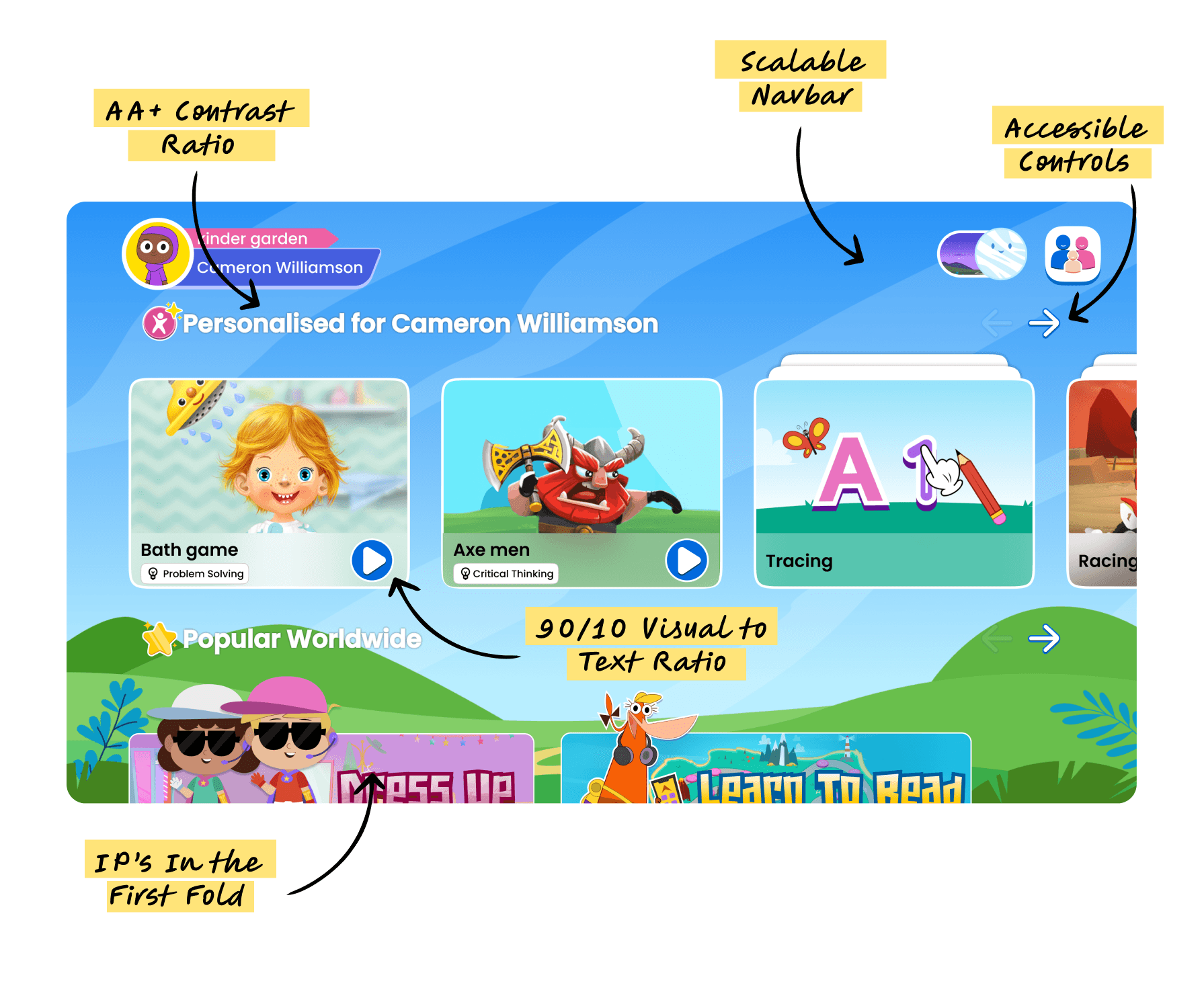
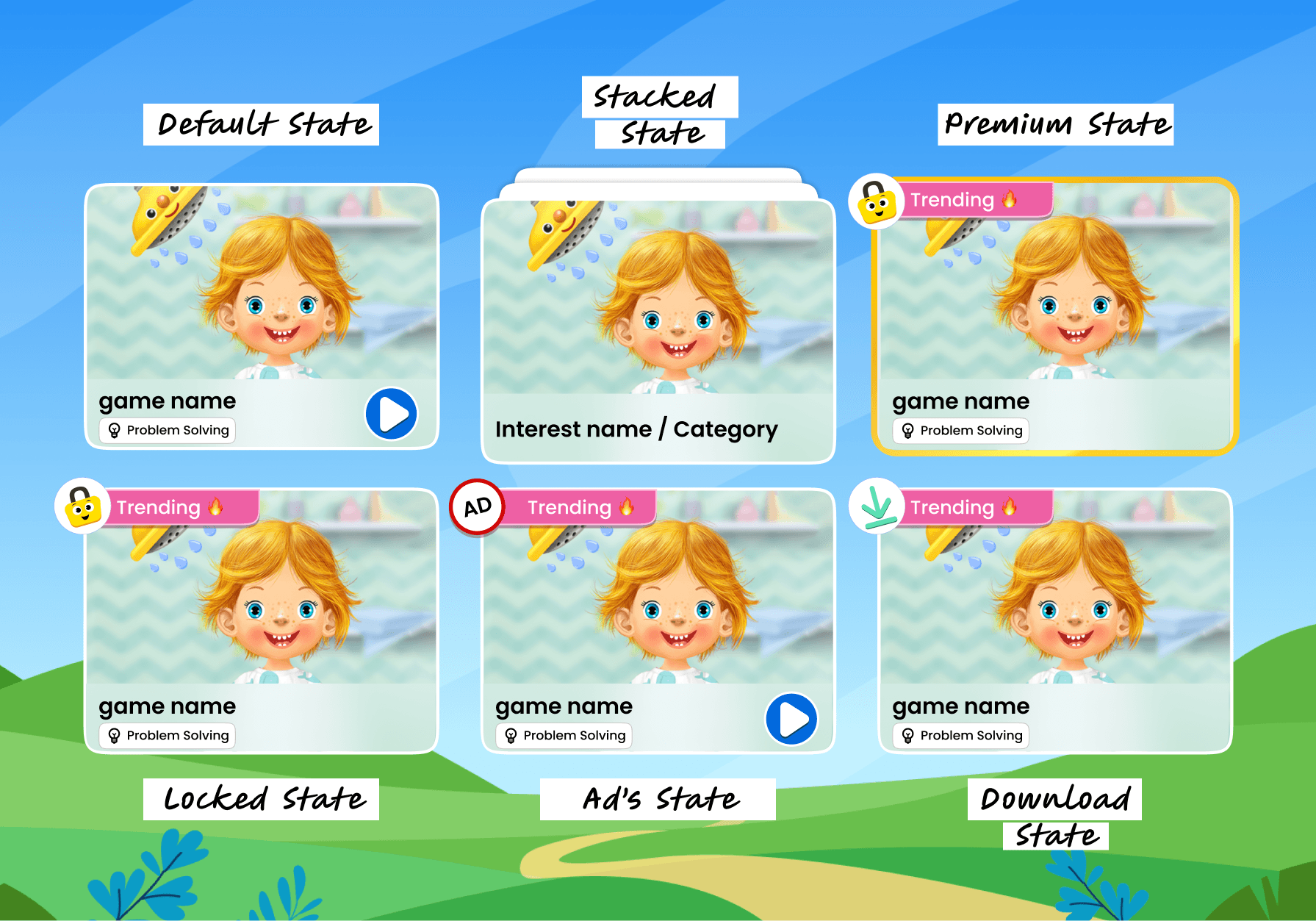
We reduced emphasis on a single main game and introduced a more natural, flexible layout that works comfortably in both vertical and horizontal use for children.
Neurodivergent Friendly
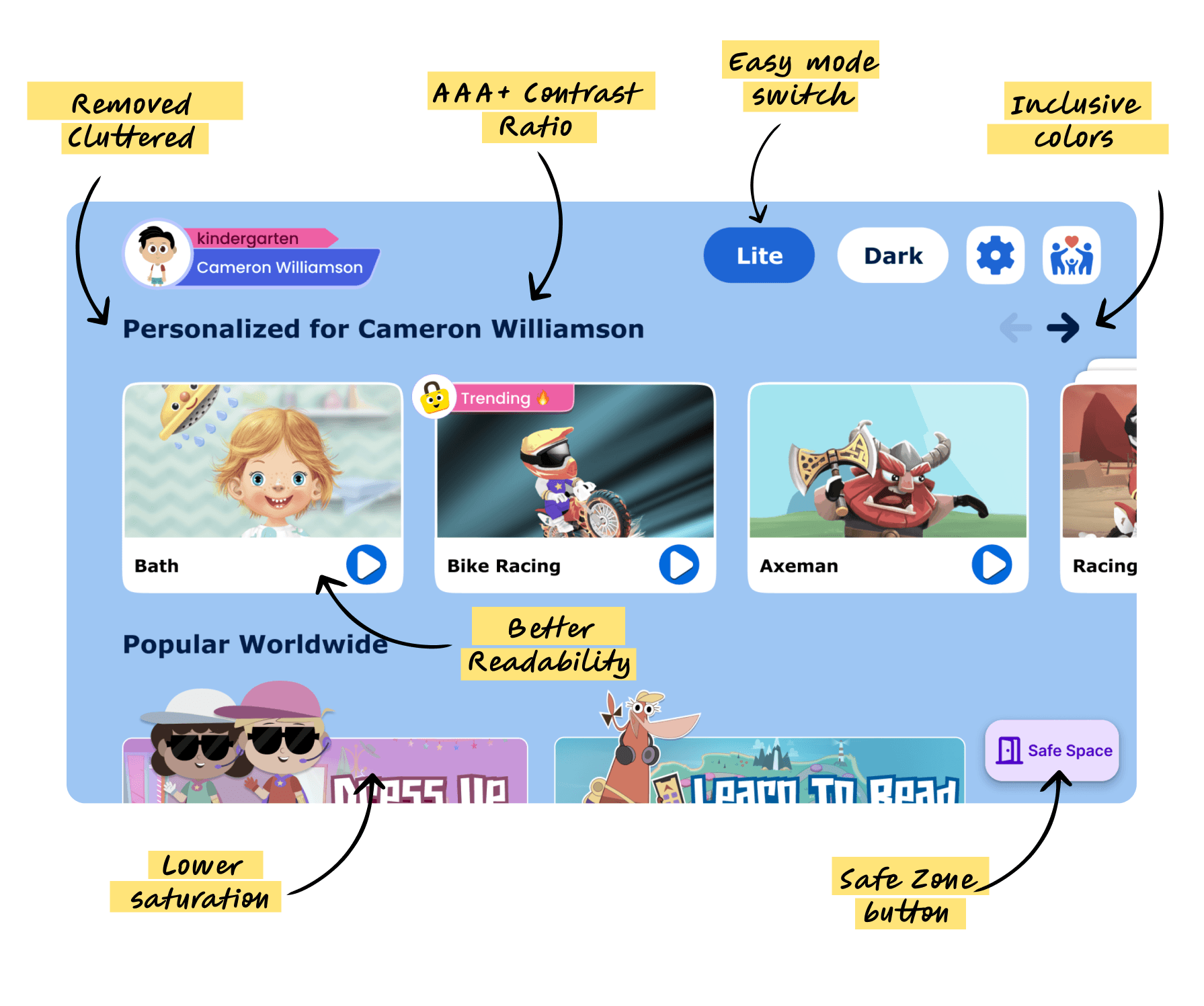
We built an agile design system that supports both neurodivergent and neurotypical children, while staying scalable for future growth.
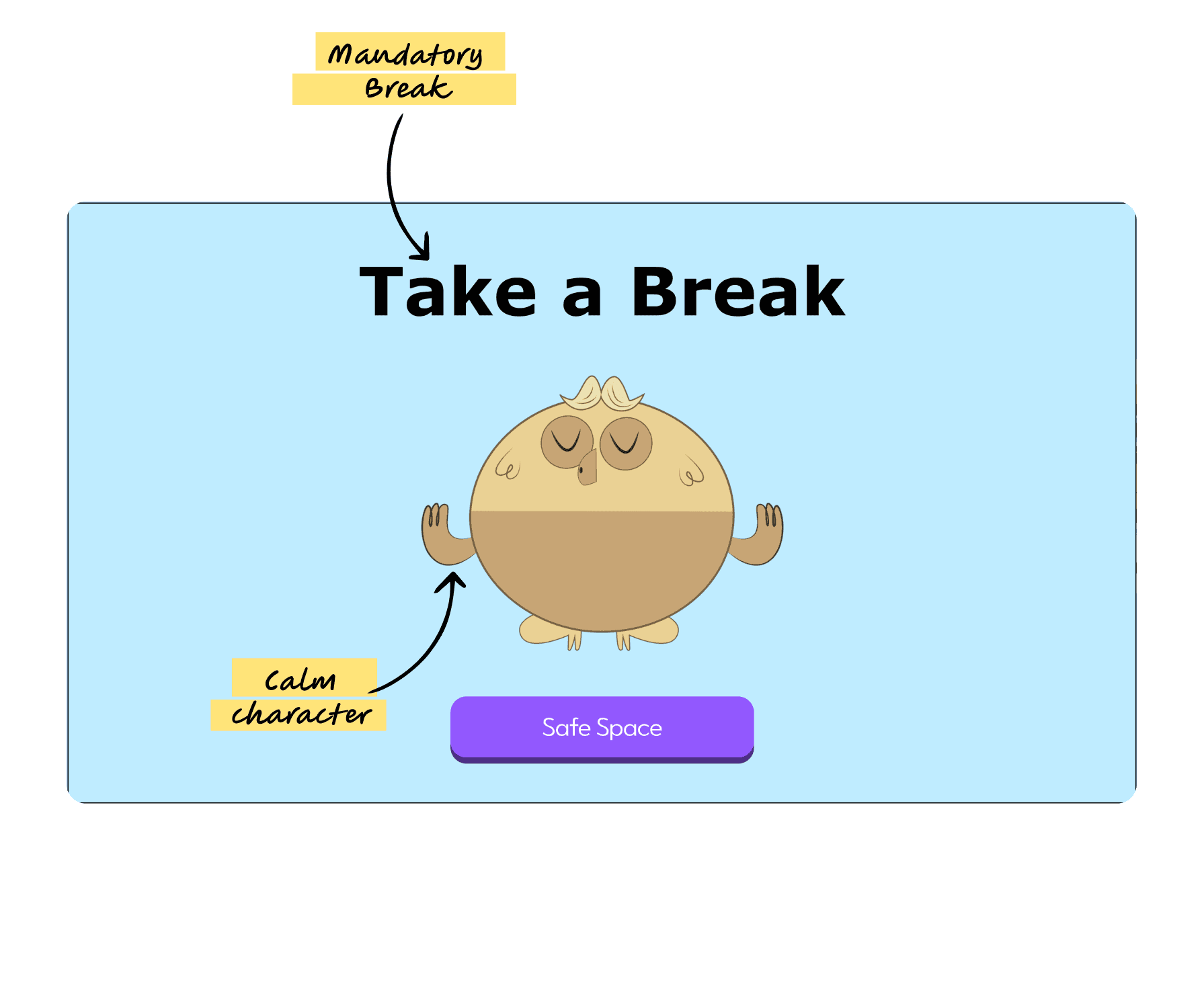
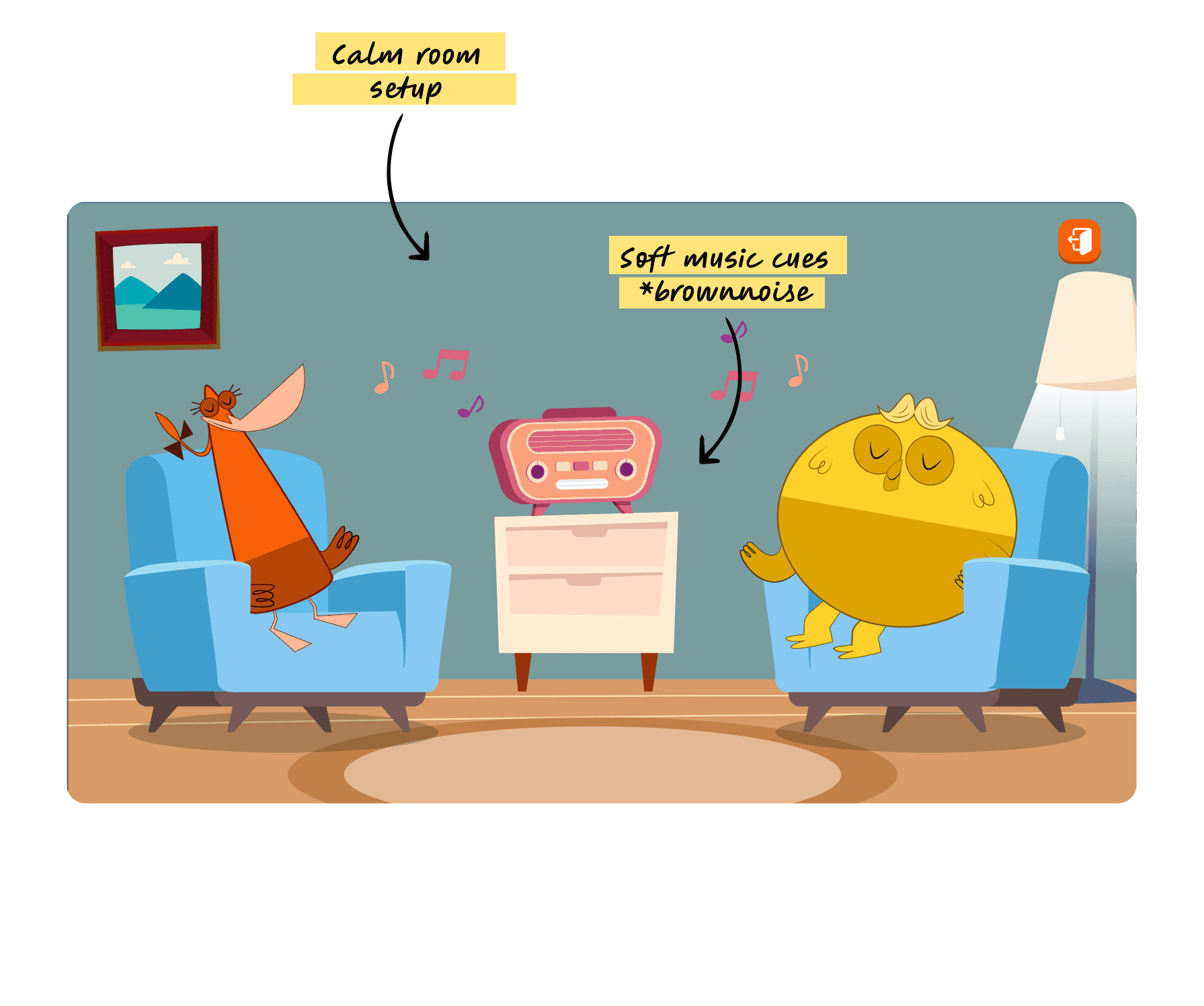
A dedicated calming space allows children to reset, either by choice or through gentle prompts.
Impact & Business Results
Measuring the Impact of the New Onboarding Experience
Measuring the Impact of the New Onboarding Experience
Content Adoption
Content Adoption
↑ 225%
↑ 225%
Retention Day 1/7/30
Retention Day 1/7/30
Retention Day 1/7/30
↑ 14.59%
↑ 14.59%
↑ 14.59%
Neurodivergent
Engagement
Neurodivergent
Engagement
37.74%
37.74%
Avg. Session Length
Avg. Session Length
Avg. Session Length
↑ 11.8%
↑ 11.8%
MAUD
MAUD
↑ 13.60%
↑ 13.60%
Avg. 1st Month
Cohert Retention
Avg. 1st Month
Cohert Retention
Avg. 1st Month
Cohert Retention
↑ 5.16%
↑ 5.16%
↑ 5.16%
Col 1 vs Col (N) &
Row 1 vs Row (N)
Col 1 vs Col (N) &
Row 1 vs Row (N)
90% vs 10%
90% vs 10%
90% vs 10%
visual representation**
Reflection & Learnings
Key Learnings From Rebuilding Onboarding From the Ground Up
Key Learnings From Rebuilding Onboarding From the Ground Up
As the only designer on the project, shaping a home experience that was scalable, inclusive, personalized, and modern was a complex challenge.
Understanding business needs was straightforward — our PM and CEO helped clarify goals early. The harder part was getting a true picture of how young children behave and where they struggled.
Working with such a young target group taught me to rely on observation rather than instructions, tasks, or verbal feedback.
Once I understood their patterns, it became clear that every interaction needed to be visible, predictable, and simple enough for a three-year-old to understand. Anything more quickly turned into noise.
Prioritizing sensory comfort became essential; small adjustments in contrast, saturation, and pacing had a much larger impact on usability than expected.
Balancing product priorities, brand requirements, and engineering constraints required constant alignment. Clear communication ended up saving more time than any design tool.
The collaboration itself was a major learning curve. Early validation from Apple’s editorial team helped confirm we were moving in the right direction. Later, working closely with a former LEGO senior designer and an ex-Apple accessibility consultant expanded my understanding of accessible, system-level design far beyond previous projects.
✌🏻
Please use a laptop or desktop to view this page.